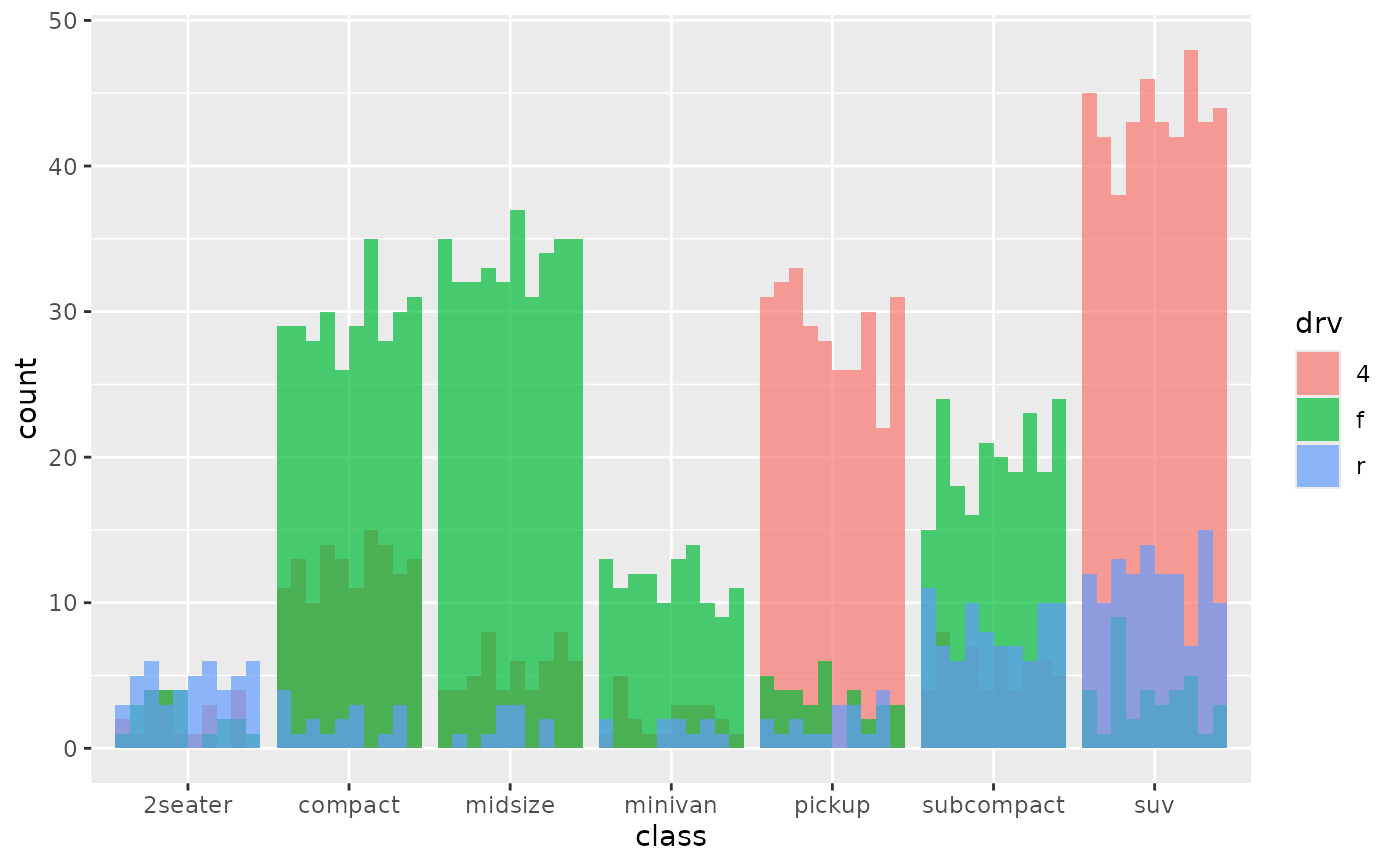
These functions use nested positioning for distributional data, where one of the positions is dodged. This allows you to set different position adjustments for the "main" and "distribution" parts of your plot.
Usage
position_dodge_dodge(
  width = NULL,
  preserve = "single",
  orientation = "x",
  reverse = FALSE
)

position_dodge_identity(
  width = NULL,
  preserve = "single",
  orientation = "x",
  reverse = FALSE
)

position_identity_dodge(
  width = NULL,
  preserve = "single",
  orientation = "x",
  reverse = FALSE
)
Arguments
- width
Dodging width, when different to the width of the individual elements. This is useful when you want to align narrow geoms with wider geoms. See the examples.
- preserve
Should dodging preserve the
"total"width of all elements at a position, or the width of a"single"element?- orientation
Fallback orientation when the layer or the data does not indicate an explicit orientation, like
geom_point(). Can be"x"(default) or"y".- reverse
If
TRUE, will reverse the default stacking order. This is useful if you're rotating both the plot and legend.
Aesthetics
position_dodge() understands the following aesthetics. Required aesthetics are displayed in bold and defaults are displayed for optional aesthetics:
| • | order | → NULL |
Learn more about setting these aesthetics in vignette("ggplot2-specs").
Examples
library(ggplot2)
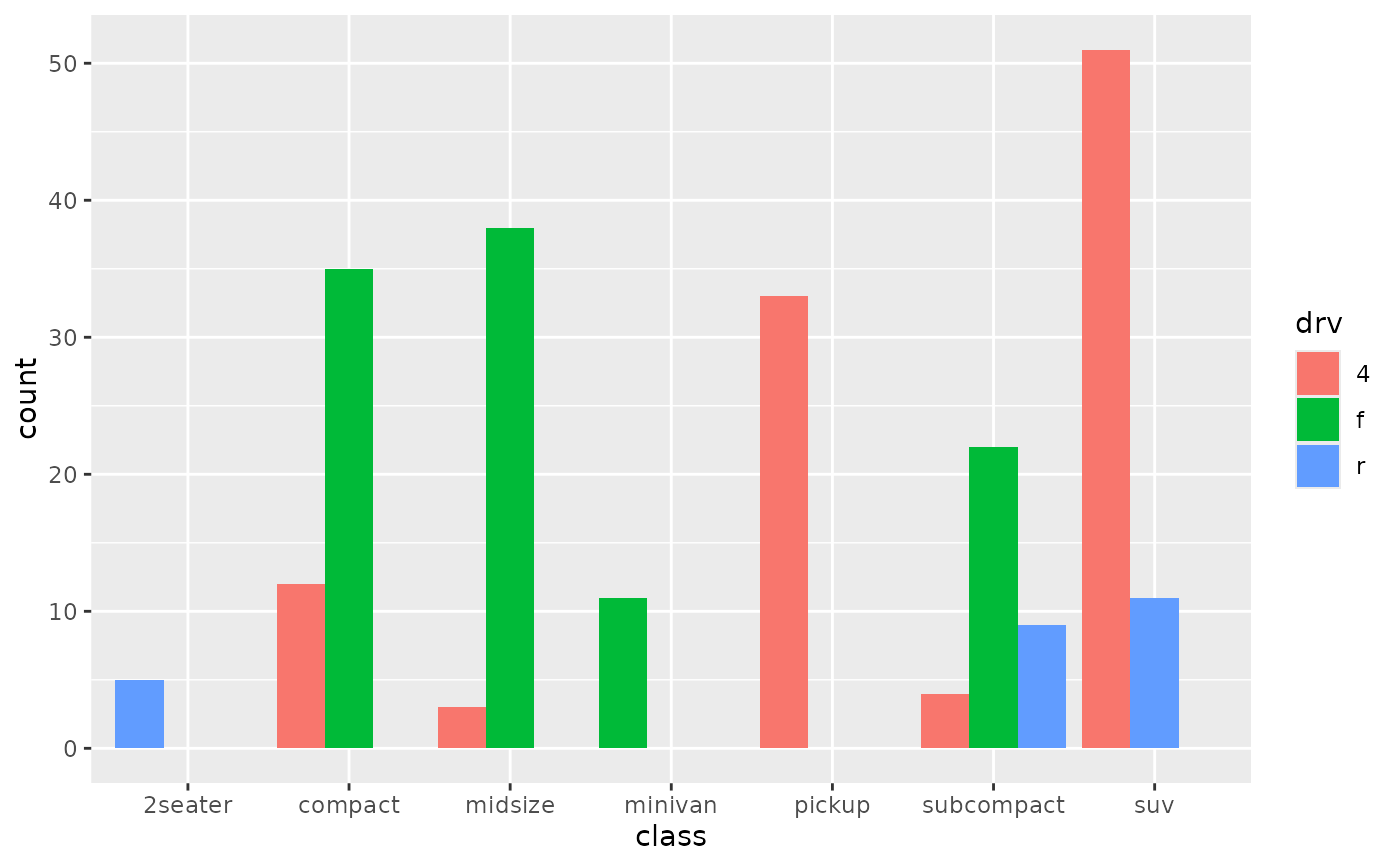
# ggplot dodge
ggplot(mpg, aes(class)) +
geom_bar(aes(fill = drv),
position = position_dodge(preserve = "single"))
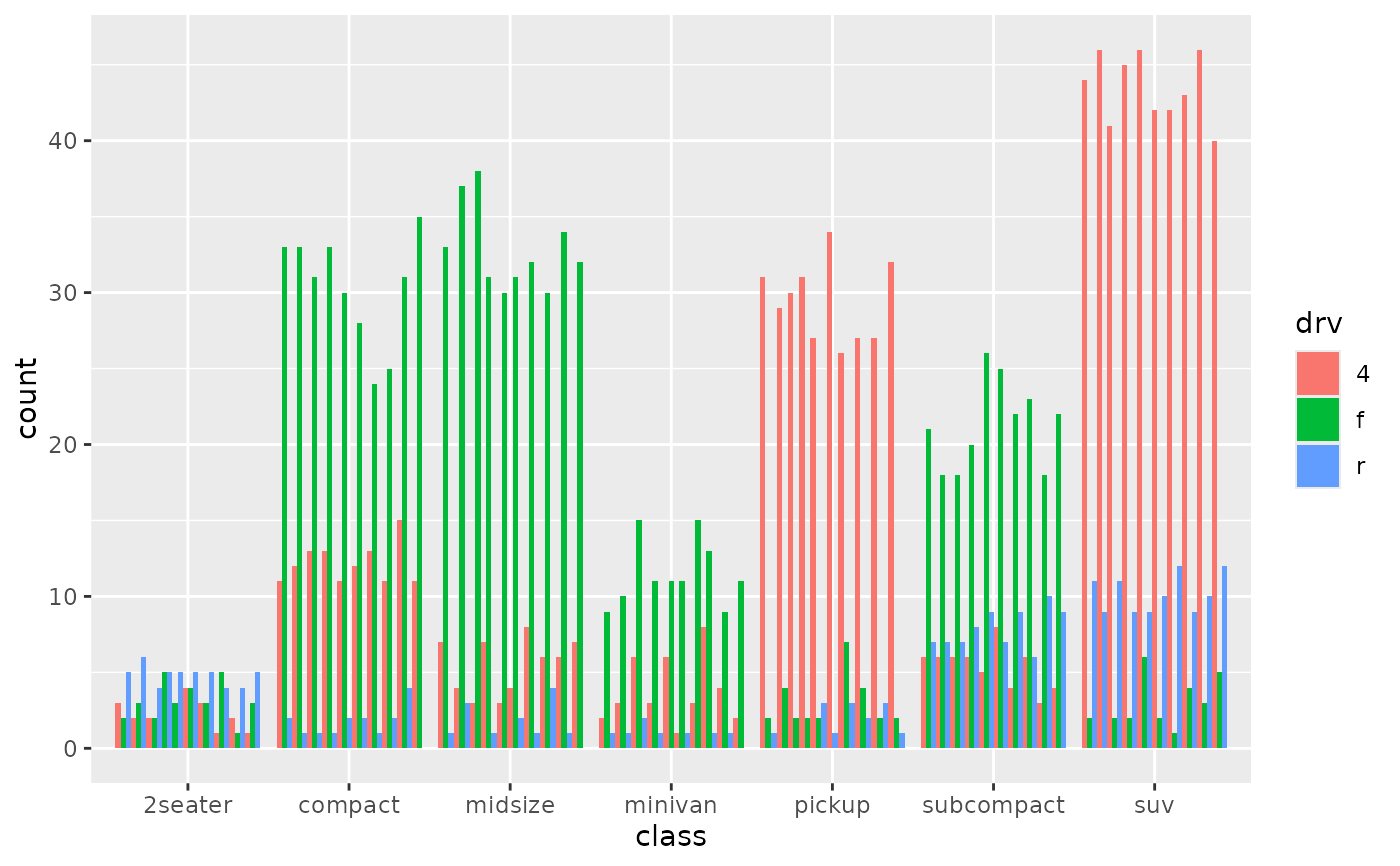
 # normal dodge without nesting
ggplot(uncertain_mpg, aes(class)) +
geom_bar_sample(aes(fill = drv), position = "dodge")
# normal dodge without nesting
ggplot(uncertain_mpg, aes(class)) +
geom_bar_sample(aes(fill = drv), position = "dodge")
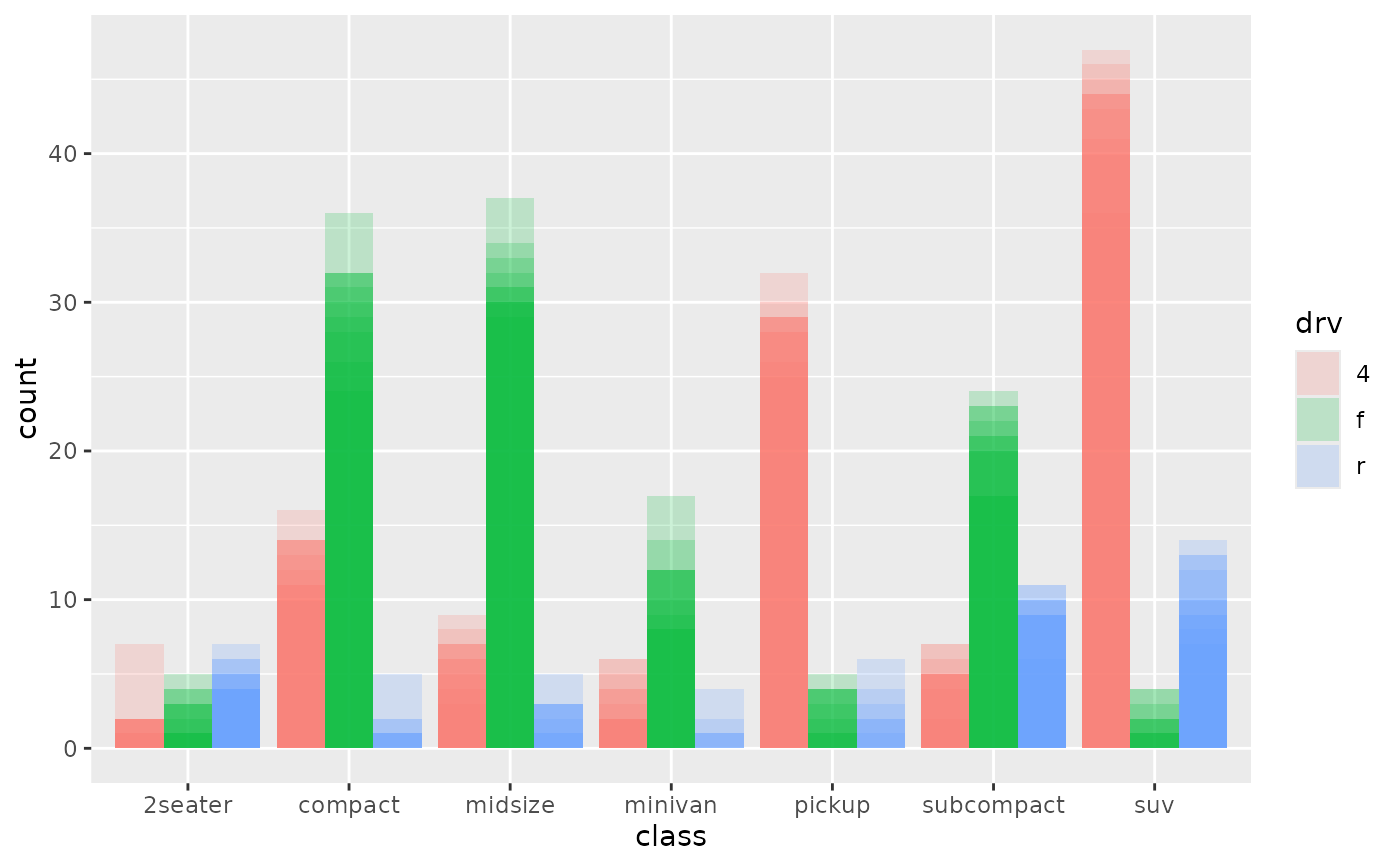
 # dodge_identity
ggplot(uncertain_mpg, aes(class)) +
geom_bar_sample(aes(fill = drv), position = "dodge_identity", alpha=0.2)
# dodge_identity
ggplot(uncertain_mpg, aes(class)) +
geom_bar_sample(aes(fill = drv), position = "dodge_identity", alpha=0.2)
 # dodge_dodge
ggplot(uncertain_mpg, aes(class)) +
geom_bar_sample(aes(fill = drv), position = "dodge_dodge")
# dodge_dodge
ggplot(uncertain_mpg, aes(class)) +
geom_bar_sample(aes(fill = drv), position = "dodge_dodge")
 # identity_dodge
ggplot(mpg, aes(class)) +
geom_bar(aes(fill = drv), alpha=0.5, position = "identity")
# identity_dodge
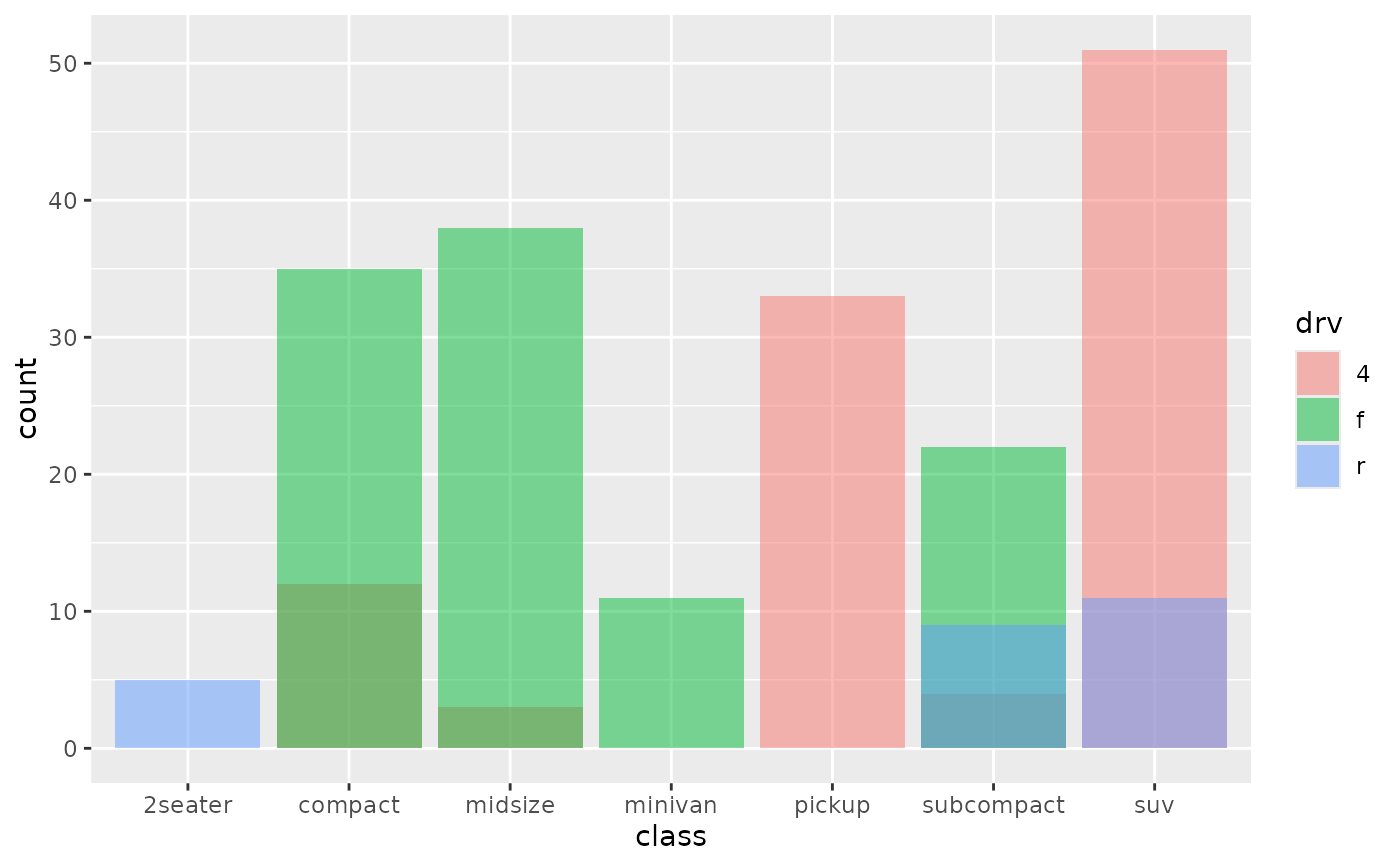
ggplot(mpg, aes(class)) +
geom_bar(aes(fill = drv), alpha=0.5, position = "identity")
 ggplot(uncertain_mpg, aes(class)) +
geom_bar_sample(aes(fill = drv), position = "identity_dodge", alpha=0.7)
ggplot(uncertain_mpg, aes(class)) +
geom_bar_sample(aes(fill = drv), position = "identity_dodge", alpha=0.7)